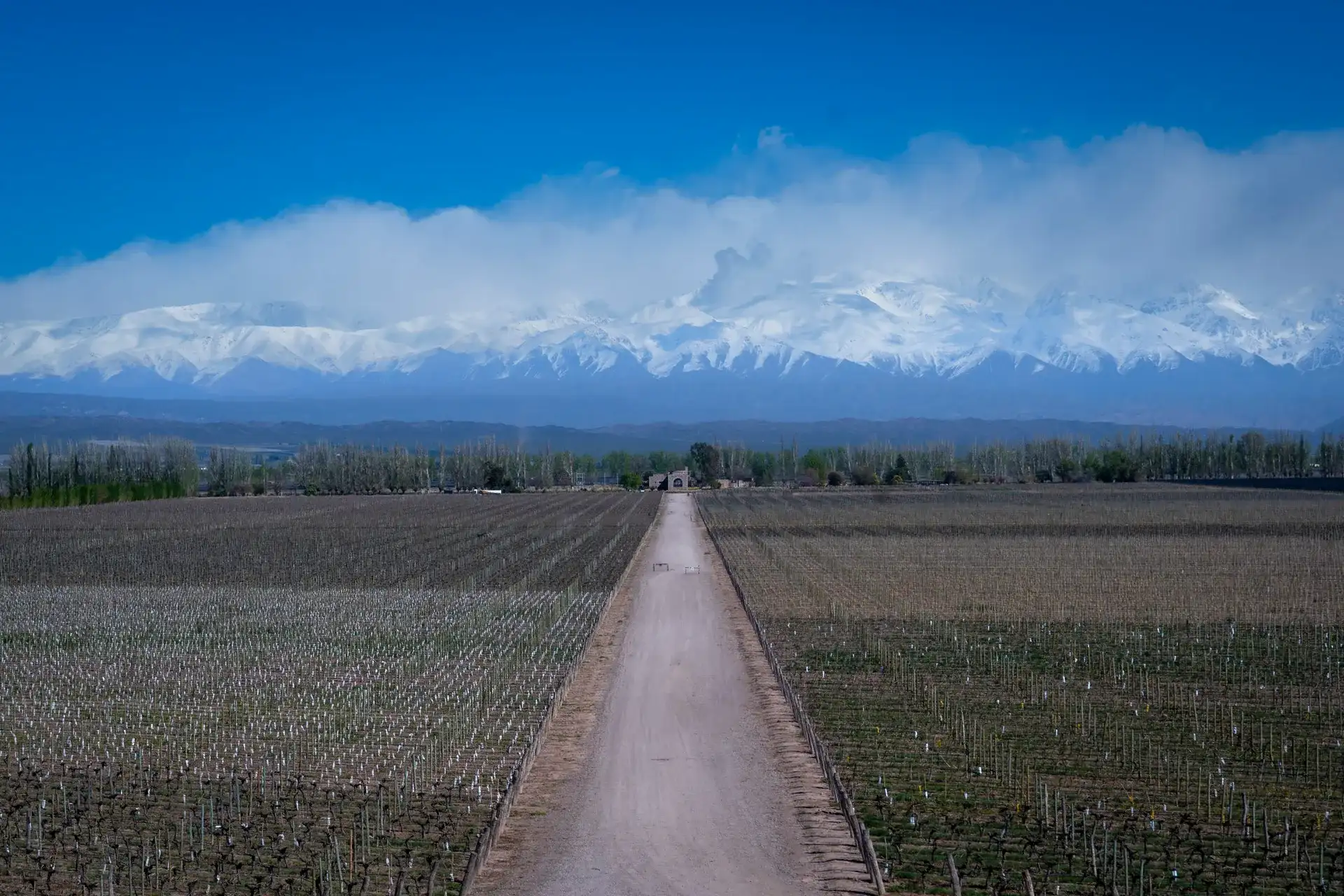
With a winemaking tradition consolidated in the late 19th century, Mendoza became the heart of Argentine wine. The province is at the foot of the Andes, in a desert environment where mountain water determines the possibility of agriculture. Today, Mendoza province accounts for 70% of national production, encompassing a network of Geographical Indications with a wide variety of altitudes, soil profiles and temperatures.
A majestic landscape, and varies widely across the seasons. Its architecture and landscaping are intimately linked to irrigation systems inherited from the Huarpes (indigenous people) for the development of productive oases, with an identity shaped by immigration. The gastronomic prestige of the province has grown steadily over the last 20 years and is now internationally renowned, primarily through its integration of wine with local agricultural products.
11 photographs